
Itinerary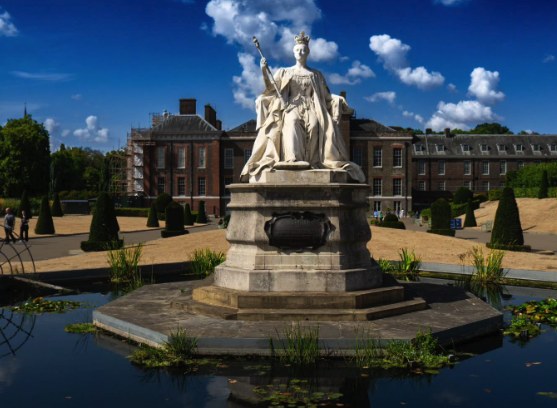
Half a Day at Kensington Palace
In this guide
- How long does Kensington Palace actually take?
- What time should you arrive?
- The ninety minutes inside, in order
- The hour outside, and what it costs (nothing)
- Where to eat, and the one table worth booking
- The summer half day, hour by hour
- The winter half day, and what changes
- Does the same half day work with children?
- What to add if you have the rest of the day
- Which station, and how the first fifteen minutes go
- The rainy-day version of the same half day
- Four ways to lose an hour, and how to avoid each
- What to book, and what not to
How long does Kensington Palace actually take?
Ninety minutes for the state apartments, which is Historic Royal Palaces' own figure and an honest one. Two hours with the Jewel Room and the exhibition. Three with the gardens. A whole morning if you have children and the playground is on the list.
That makes this a half-day attraction rather than a full-day one, and it is the single most useful thing to know when you are building a London itinerary around it. You can pair it with Notting Hill, with the museums at South Kensington, or with a long walk east through Hyde Park, and still be somewhere else by two o'clock.
What time should you arrive?
Ten, when the doors open. Not because anything happens at ten, but because the first hour is the emptiest the King's State Apartments get in any month of the year, and this is a building where the difference between reading a room and queueing through it is about forty minutes of timing.
The second-best answer is different by season. In summer, four o'clock gives you two quiet hours and the best light of the day on the east front. In winter, four o'clock is closing time.
| Season | Open | Close | Last admission | A ten o'clock arrival gives you |
|---|---|---|---|---|
| 1 March – 31 October | 10:00 | 18:00 | 17:00 | Eight hours if you want them |
| 1 November – 28 February | 10:00 | 16:00 | 15:00 | Six hours, and the light goes at four |
The two timetables, and what each leaves you.
The ninety minutes inside, in order
The route is fixed by the building and the handset follows it. This is what to do with the time.
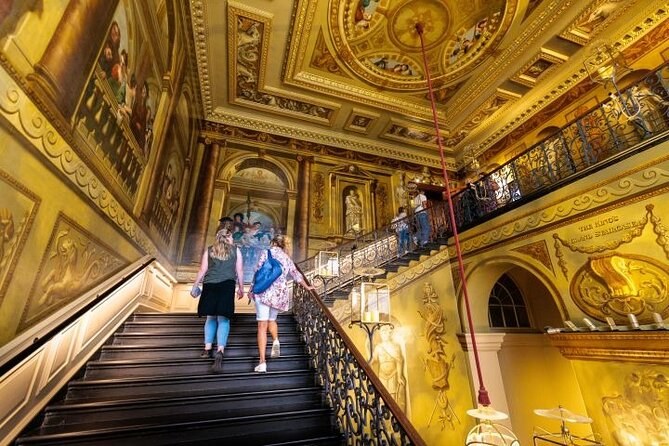
- 10:00–10:15, the King's Grand Staircase. Climb it, then turn at the top and look back. Kent painted George I's household leaning over a balustrade that is not there, and the figures are arranged for the view from the landing.
- 10:15–10:35, the Cupola Room and the King's Gallery. Kent's flat dome painted as a coffered one, Charles Clay's musical clock at the centre, then ninety-six feet of crimson damask with a working 1694 wind dial over the chimneypiece.
- 10:35–11:00, Victoria's rooms. Her dolls, her journals, and the bedroom with the bed and the curtained cot she was born beside in 1819.
- 11:00–11:30, the Jewel Room and the exhibition. The emerald parure Albert designed, the Fife tiara, and whatever show is running.
What you see inside takes each of those properly, including the wing that is closed until spring 2027.
The hour outside, and what it costs (nothing)
Every part of the garden half is free and open daily, which is worth knowing before you pay for a walking tour of it. From the palace door the loop that works is short.
- 11:30, the Sunken Garden. Five minutes from the door. Look down into it from the Cradle Walk, which is where it was designed to be seen from, with Diana's statue at the far end of the lily pool.
- 11:45, the Round Pond. Queen Caroline's basin, due east, and the view back that puts the palace in the middle of a park rather than at the edge of a road.
- 12:00, the Italian Gardens. Twenty minutes north along the Long Water, with the Peter Pan statue on the way.
The gardens covers all of it, including the ninety-minute route the paid walks follow.
Where to eat, and the one table worth booking
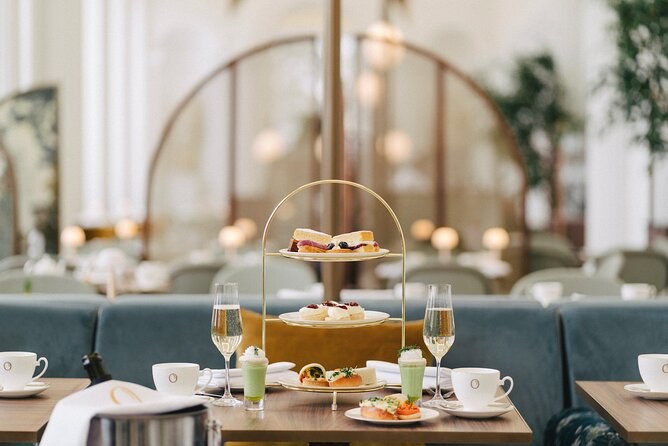
Two options in the grounds, and they are not equivalent. The Palace Cafe does a takeaway cream tea and is the cheapest way to eat inside the gates. The Orangery, Queen Anne's 1704 greenhouse, does the full afternoon tea.
The Orangery is the reason most of the guided trips here exist: they hold a table in your name before you arrive, and at a busy time that is genuinely difficult to arrange yourself. If a proper tea is part of the day you want, booking a walk that includes one is usually easier than booking the table.
Afternoon tea tours compares them on table, price and whether palace entry comes with it.
The summer half day, hour by hour
1 March to 31 October, when the palace closes at six.
| Time | What you are doing |
|---|---|
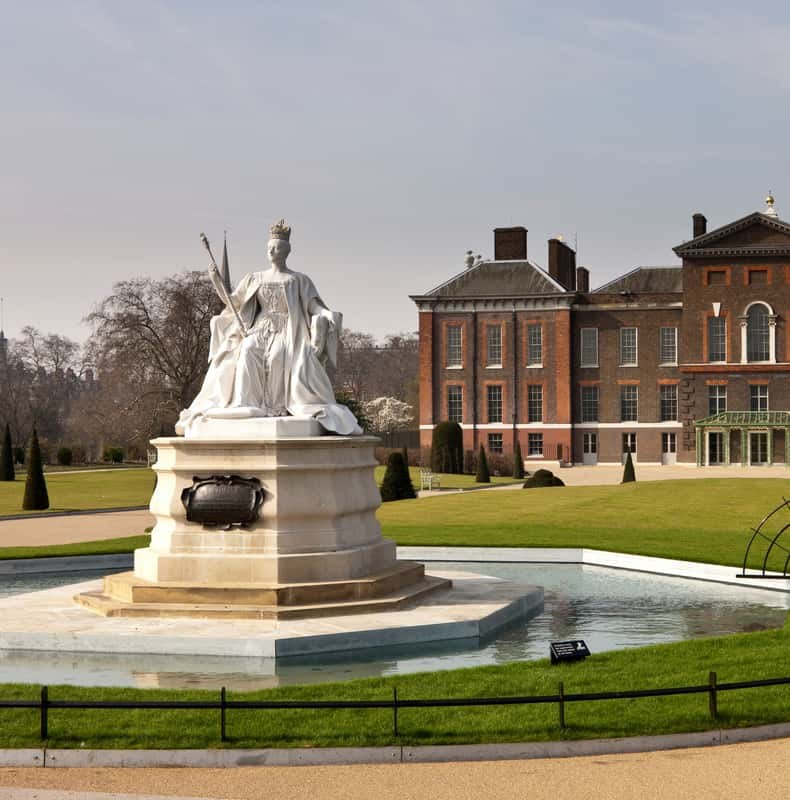
| 09:45 | At the gate; head for the Queen Victoria statue on the east front |
| 10:00 | Grand Staircase, then the Cupola Room |
| 10:35 | The King's Gallery and the wind dial |
| 10:50 | Victoria's childhood rooms |
| 11:15 | The Jewel Room and the exhibition |
| 11:45 | Out to the Cradle Walk and the Sunken Garden |
| 12:15 | The Round Pond and the Italian Gardens |
| 13:00 | Tea at the Orangery, or the cafe if time is short |
| 14:00 | Out at Queensway or High Street Kensington |
A summer half day, arriving at ten.
The winter half day, and what changes
1 November to 28 February, when last admission is three and the doors shut at four. Two things change and neither is a problem if you plan for them.
- Go in first, garden after. In summer the order is flexible. In winter the building closes before the park does, so the palace has to come first.
- The light goes at four. A four o'clock finish in the Sunken Garden in December is a walk in the dark. Do the garden between twelve and two instead.
The compensation is real: January and February are the emptiest months inside, and the King's State Apartments on a winter Wednesday morning are as close to private as this building gets. The best time to visit takes the year month by month.
Does the same half day work with children?
Better than most palaces, for one reason: it is short enough to finish. Under-fives go free, ninety minutes is inside a small child's attention span, and photographs are allowed.
The change to the plan is where it ends. Instead of the Italian Gardens, walk north-west to the Diana Memorial Playground near the Black Lion Gate, which is free, built around a wooden pirate ship, and admits adults only with a child. Do the palace first at ten while everybody is fresh, and keep the playground as the thing that happens afterwards.
What to add if you have the rest of the day
The palace sits between three neighbourhoods that each make a different afternoon.
- South Kensington, twenty minutes south: the Albert Memorial on the way, then the Victoria and Albert, the Natural History Museum and the Science Museum, all free.
- Notting Hill, fifteen minutes north-west: Portobello Road, and the market on a Saturday.
- Hyde Park east, thirty minutes: the Serpentine, the Diana Memorial Fountain and out at Hyde Park Corner for Buckingham Palace.
That last one is the combination most visitors want, and it works better in reverse: Guard first, palace second. The Kensington against Buckingham comparison sets out which days give you both.
Which station, and how the first fifteen minutes go
The palace has no street frontage, so wherever you come from you finish on foot across the park. Two stations serve it and the one you want depends on what you booked.
If you are holding a plain entrance ticket, take High Street Kensington on the Circle and District lines and walk north. That puts you on the south side, at the end where the ticket office and the visitor entrance are, and the walk is ten to fifteen minutes on level made paths.
If you booked a guided walk, take Queensway on the Central line, because that is almost certainly where your guide is standing. Two operators put that in capital letters on their own listings, which tells you how many people go to the palace instead and miss the start.
Either way, the landmark to aim for once you are inside the park is Princess Louise's marble statue of her mother, carved in 1893 and standing in a basin on the east front. First-time visitors say the same thing in their feedback: head for the Queen Victoria statue and the entrance is right there. Getting here has every meeting point on the site in one table.
The rainy-day version of the same half day
It is London and you should plan for rain rather than around it. Two facts make that easy here. The palace half is entirely under cover, and the exposed part of the day is a walk of fifteen minutes at each end.
So invert the order. Go straight in at ten, take the rooms slowly, add the Jewel Room and the exhibition, and use the Palace Cafe or a booked table at the Orangery for the middle of the day rather than crossing the park. If it clears, the Sunken Garden is five minutes from the door and you can pick the outdoor half back up whenever you like.
One traveller had rain from start to finish on a January visit and still rated the day highly, for exactly that reason. The only thing genuinely worth avoiding is a winter afternoon arrival: last admission is three o'clock from November to February, and the light goes soon after. The best time to visit has both timetables and the month-by-month detail.
Four ways to lose an hour, and how to avoid each
- Arriving on a Monday or Tuesday. The palace is closed. The park is not, so walk the gardens and book the rooms for the Wednesday.
- Going to the palace when your tour meets at a station. Read the meeting point on your confirmation before you set off; most guided walks start at Queensway.
- Turning up after last admission. An hour before closing, which is three o'clock in winter. Check the season, not the closing time.
- Bringing a suitcase. Large bags are refused at the entrance and there is no left luggage on site, so leave them at your hotel or a station locker.
None of these costs money, and all four cost time. Plan your visit carries the timetable, the prices and the identification you need at the gate.
What to book, and what not to
For a half day of your own making, book the entrance ticket and nothing else. It costs about $25, includes the handset, and leaves the garden hours free in every sense.
Book a guided walk instead when you want the park told out loud and a table waiting at the end of it, which is a different day and a good one. Book the long combined day when royal London as a whole is what you are here for, and you would rather one booking than four decisions.
Kensington Palace tour compares every option on price, group size and time inside, and plan your visit has the timetables in full.
Tours that fit this guide
Picked for what this guide covers, not for what sells.