
The History of Kensington Palace
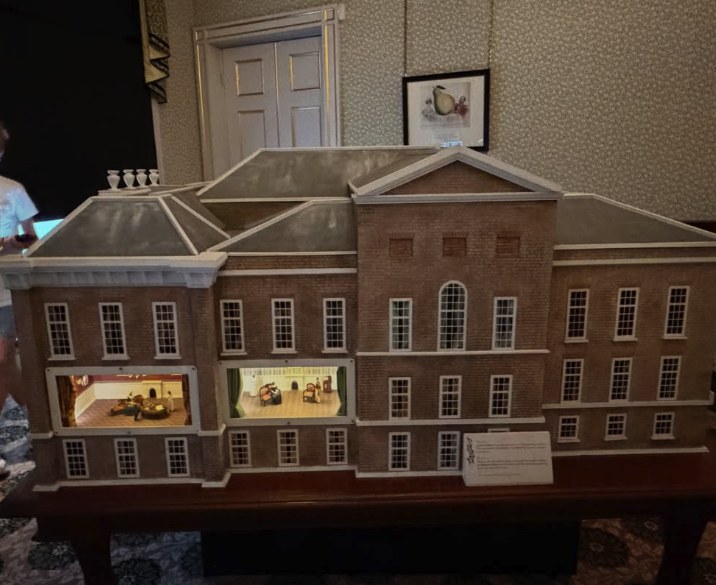
Kensington Palace was not built as a palace. It was a country house on the edge of a village. A king who could not breathe in central London bought it, and everything that followed happened inside somebody else's house.
1605: a Jacobean house at the edge of a village
The building at the centre of the palace went up in 1605 for Sir George Coppin, a Jacobean gentleman's house in a village well outside London. It passed to Sir Heneage Finch and then to his son Daniel, second Earl of Nottingham, and took his family's name: Nottingham House. Nothing about it at that point suggested a court. It was two miles of open country from Whitehall, which turned out to be the whole point.
1689: William III and Mary II pay £20,000 for the air
William III and Mary II came to the throne after the Glorious Revolution of 1688, and the royal residence in London was Whitehall Palace, on the river. William had chronic asthma. The damp off the Thames and the coal smoke from the chimneys made Whitehall a hard place for him to live. Within months of accession the new king and queen bought Nottingham House and its grounds from Sir Daniel Finch. The price was £20,000.
It is worth sitting with that reason. Almost every royal palace in England exists because of defence, dynasty or display. This one exists because a king wanted cleaner air, and it is why the palace stands in a park rather than on a street.
Wren, Hawksmoor and a Christmas Eve move-in
Sir Christopher Wren drew up the plans, with Nicholas Hawksmoor as Clerk of Works. Rather than demolish the house they extended it. A three-storey pavilion went up at each of the four corners, with new apartments for the King and the Queen. A new entrance to the west added an archway and a clock tower. The first phase went up fast enough that William and Mary moved in on Christmas Eve 1689, months after buying it.
Speed has a cost. Part of the new building collapsed during construction, and Wren was called to account for it. What survived is the shape you walk into today: not one grand design but a house with a palace grown onto its corners.
Queen Anne, the Orangery and a garden in the English taste
Queen Anne came to the throne in 1702 and turned her attention outdoors. She replaced the Dutch formal planting of her predecessors with something looser in the English taste. In 1704 she added the Orangery, a long building of brick and Portland stone put up to keep her citrus trees alive through the winter. It was probably designed by Wren, executed by Hawksmoor and possibly revised by Vanbrugh. It is still there, and it is where the afternoon-tea walks listed here finish.
George I, George II and the rooms Kent painted
George I arrived in 1714 and wanted state rooms worthy of the new dynasty. Three were built, and in 1722 the King gave the decoration not to the established Sir James Thornhill but to William Kent, who had never done anything of the kind. Kent painted the Cupola Room first, then the Grand Staircase. There he filled the walls with George I's own household — pages, yeomen, the King's Turkish grooms, his Polish page — leaning over a painted balustrade to watch the real court climb past.
Under George II and Queen Caroline the palace reached its height as a working court. When George II died here in 1760, no reigning monarch lived at Kensington again.
1819: a queen is born in a back bedroom
The palace spent the later eighteenth century as apartments for minor royals. The Duke and Duchess of Kent were living in one of them when their daughter was born on 24 May 1819. She was fifth in line to the throne and nobody expected her to reign. She was christened in the Cupola Room and grew up in these rooms under a strict and isolating regime. In June 1837 she was woken here to be told she was Queen Victoria.
From royal backwater to public palace
The Sunken Garden, laid out in 1908 on Edward VII's instruction, belongs to the same period of renewal. By the end of Victoria's reign the state rooms were in poor condition and there was pressure to demolish them. Victoria intervened: the palace where she was born was restored and opened to the public, and the state rooms have been visitable ever since. The Second World War did damage that took years to repair. Through the twentieth century the private apartments filled again with members of the royal family rather than the monarch.
The household today, and what is private
Kensington Palace remains a working royal residence. Apartments 8 and 9, where Diana, Princess of Wales lived from 1981 until 1997, are private and have never been open to visitors. The same is true of Apartment 1A. The Prince and Princess of Wales moved their family home to Forest Lodge in Windsor Great Park in October 2025, though the household is still based here. What you buy a ticket for is the historic half of the building, and it has been that way since 1899.
The dates in order
| Year | What happened |
|---|---|
| 1605 | A Jacobean house built for Sir George Coppin |
| 1689 | William III and Mary II buy Nottingham House for £20,000 |
| 1689 | Wren begins work with Hawksmoor as Clerk of Works; the monarchs move in on Christmas Eve |
| 1702 | Queen Anne remakes the gardens in the English taste |
| 1704 | The Orangery is built to overwinter Anne's citrus trees |
| 1714 | George I arrives and commissions three new state rooms |
| 1722 | William Kent begins painting the Cupola Room, then the Grand Staircase |
| 1723 | Kent's Cupola Room ceiling is finished |
| 1760 | George II dies at Kensington; no reigning monarch lives here again |
| 1819 | Princess Victoria is born on 24 May and christened in the Cupola Room |
| 1837 | She is woken here to be told she is Queen |
| 1899 | The restored state rooms open to the public |
| 1908 | The Sunken Garden is laid out on Edward VII's instruction |
| 2021 | Ian Rank-Broadley's statue of Diana is unveiled in the Sunken Garden |
Dates from Historic Royal Palaces and published architectural histories, checked in August 2026. One booking listing dates the palace to "Sir Christopher Wren between 1789 and 1794", which is a century out; Wren died in 1723.
For what survives of all this, what you see inside takes the rooms in order. The gardens covers Anne's Orangery and everything Edward VII added afterwards. Kensington Palace Tours sets every bookable way in side by side, and all Kensington Palace tours and tickets includes garden walks that tell this story out loud.